Why Searching 'Liebherr 200t Crane' Is Only Half the Battle
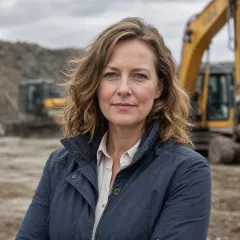
I coordinate rush equipment requests for a heavy-lifting rental company. I've handled 180+ emergency orders in six years: late-night calls, same-day turnarounds, and 'can you make it happen?' requests from site managers who are already on the hook for penalties. So when someone searches 'liebherr 200t crane,' I know what they're actually trying to do.
They're not looking for a brochure. They need to lift something heavy by a date. The search works. But it's also where the trouble starts.
The Surface Problem: You Need a 200t Crane, and You Need It Now
In October 2024, a site supervisor called at 4:30 p.m. The plant was shut down, a turbine bearing had failed, and the replacement had to be lifted into position by 7 a.m. two days later. Normal turnaround for a 200t crane mobilization in that region was three days. He'd already searched 'liebherr 200t crane.' He sounded sure about the model.
He was sure about the brand, not about the conditions. The crane was available. The transport was available. But the site had a 10% grade, soft soil near the pad, and an overhead line running along the access road. The LTM 1200-5.1 could do the lift, but not without a configured counterweight package, steel mats, and a lift plan. We got it done. But not because the keyword was right.
Here's what I've learned in my role coordinating rush equipment requests: when someone types 'liebherr 200t crane,' they think they're shopping for a product. In reality, they're trying to solve a site-specific puzzle. The product is part of the answer, not the whole answer. As of January 2025, the Liebherr LTM 1200-5.1 is listed as a 200-tonne mobile crane with a 66-metre telescopic boom on liebherr.com. That's the part search engines are good at. The rest of the story—soil, access, configuration, lifting radius—is not indexed.
The Deeper Problem: Search Terms Don't Carry Site Conditions
It's tempting to think more crane capacity equals more safety buffer. But the 'more capacity' advice ignores one thing: configuration. A 200t crane with the wrong jib, wrong counterweight, or wrong positioning can be less capable than a 100t crane with the right setup. The chart only works when the machine matches the site.
Why does this matter? Because the gap between '200t crane' and 'the right 200t crane' is where the real cost hides. In Q4 2024, we processed 47 rush orders with 95% on-time delivery. The two that missed? Both had incomplete setup information. Not a transport issue, not a mechanical issue, not a price issue. The initial request didn't include the ground condition. That's what a keyword search looks like in operation: fast, confident, and incomplete.
That's why 'liebherr t 284 mining truck' shows up alongside crane searches. It's a different universe. The T 284 is an ultra-class diesel-electric mining truck in Liebherr's mining lineup. If you're comparing it to a 200t crane, you're probably trying to understand which machine fits a site: one moves material on the ground, the other lifts material in the air. They have the same logo, but their selection logic doesn't overlap. A search engine doesn't know which job you're planning. It just gives you results for both. According to Liebherr's mining equipment section (liebherr.com), the T 284 sits in their ultra-class truck range; verify current specifications before planning.
The Weird Queries Are More Honest Than They Look
Then there are queries like 'bucket golf,' 'sump pump,' and 'what is a mixer party.' They look like mistakes. I don't think they are.
'Bucket golf' is a real operator training exercise. You use an excavator to pick up a golf ball, move it, and drop it in a target. It sounds like a game. It's actually a precision drill. A person searching 'bucket golf' probably isn't looking for a Liebherr attachment. They're trying to train an operator to be smoother. The query is a symptom of a skill problem, not a parts problem. Never expected a phrase from a weekend fairground to show up in a heavy equipment inquiry. It did. Turns out it's a legitimate drill.
A 'sump pump' search is different. If you're working on an excavation and you search 'sump pump,' you're probably trying to dry the site before the crane arrives. The real issue is sequencing: dewatering, ground prep, machine setup. The pump is a detail. The question isn't 'which sump pump'—it's 'how do I get site work started in wet ground?'
And 'what is a mixer party'? From the construction side, a mixer is a concrete mixer truck, and multiple trucks arriving at once can create a bottleneck. From the event side, it's something else entirely. I'm not an event planner, so I can't speak to that definition. But the construction version is a logistics problem: too many trucks, not enough pour space, or a batching schedule that doesn't match the pump. The search is trying to make sense of a phrase in an unfamiliar context.
These searches are the best market research I get. They're not asking 'what is a Liebherr 200t crane?' They're asking 'which machine solves my situation?' The situation is where the problem lives.
The Cost: What Happens When the Answer Doesn't Fit the Question
In March 2024, a contractor booked a 200t crane for a steel frame lift. The rental was $18,000. The crane arrived on time. But the lift plan assumed the crane could set up in one position. On the day, a survey marker showed a buried storm line directly under that position. Moving the crane to a safe location extended the radius by 18 metres. The crane's capacity at that radius was less than the lift weight. The contractor had to bring in a second, larger crane for the critical picks. Total extra cost: $27,000. The contractor told me later the penalty for missing the shutdown window was $50,000, so they still came out ahead. But they lost a week.
I'm not a structural engineer, so I can't speak to the load path calculations. What I can tell you from a rental coordination perspective is that ground conditions matter as much as crane capacity. The contractor didn't lose because the crane was weak. They lost because the setup position was wrong. A search for 'liebherr 200t crane' would not have caught that. A five-minute conversation with a lift planner would have.
That's the thing about search-first equipment planning: it's cheap until it isn't. A wrong assumption hidden in a keyword can cost more than the machine itself. I've seen it enough times that I now ask the same five questions before I quote anything.
Stop Searching. Start Specifying.
If you've ever felt that the search for 'liebherr 200t crane' gives you the same spec sheet over and over, that's not because the internet is broken. It's because you've moved past the product question and into the site question. Those are different questions.
Here's what you need to know: a one-page equipment request with the right answers beats an hour of search. In my company, we changed our intake form to include five questions:
- What exactly are you lifting? (Weight, dimensions, center of gravity)
- Where is the load now, and where does it need to be? (Horizontal distance, height, obstacles)
- What is the ground doing under the crane? (Slope, soil, buried utilities, load-bearing limits)
- What is the actual deadline? (Mobilization counts as time)
- Who is responsible for the lift plan and rigging?
That sounds simple. It is. But it's also the most efficient thing you can do. When we switched to this structured request format, our average response time for rush orders dropped from six hours to ninety minutes. The missing information didn't disappear, but it became visible early, when it could still be fixed. Efficiency is competitiveness. The fastest way to get the right machine isn't the fastest search. It's the cleanest spec.
Look, I'm not saying search is useless. I use it every day. But in heavy lifting, the difference between a keyword and a plan can be six figures or a missed shutdown. The better question is the better machine. Ask that question first.
Trust me on this one.
Charlotte Avery
Charlotte Avery is an earth-moving machinery analyst covering excavators, mini excavators, loaders, skid steers, dozers, graders, compactors, and attachments. She uses ISO 6165 machine classification and ISO 20474-1 safety requirements while examining operating mass, rated payload, breakout force, ground pressure, stability, visibility, guarding, and attachment compatibility. Her work helps contractors and fleet buyers match machine size, undercarriage, transport limits, and protective features to terrain, duty cycle, and jobsite access.